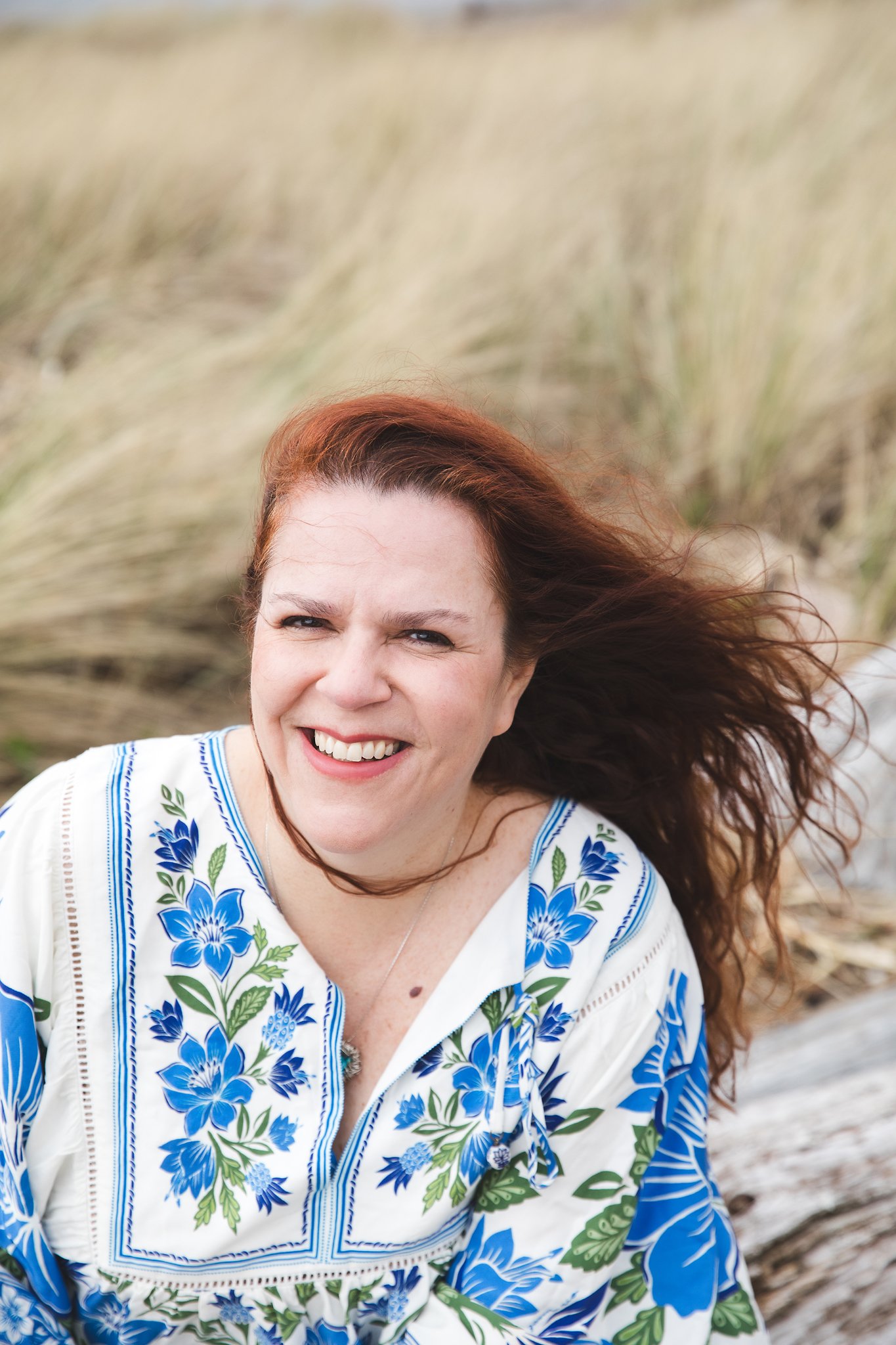
About
I read stories for the pattern underneath.
Not to predict what happens next, but to see the shape we're actually in, because the shape is what lets us move through a life as its main character instead of its victim. So much of what we're handed is a flattened story, a single thin narrative we get sold and then mistake for the truth. Stories, the real ones, hold more than that. They're the medicine and the map at once. And the answer to the question pressing on you now is usually hiding in plain sight, inside something you were taught to think was too small to matter.
I've been doing this my whole life, long before I had a name for it. As a child, it was fairy tales. Not for escape, but for the magic, and for the way they widened the world. The dramas of ordinary life around me wanted to flatten everything into one story with no imagination in it, and fairy tales held the door open to more, to possibility, to the worlds underneath the world. I couldn't have said that then. I can say it now.
The appetite never left. It only changed what it fed on.
Novels. History, especially the ancient and the medieval, those worlds that look nothing like ours until you see they're the roots of it.
Astrology found me in my teens, and I started studying it in earnest in my early twenties, the birth chart as one more story to read. That study led me to Liz Greene, and Greene led me to Jung, and from there the door opened onto depth psychology and mythology, where I stayed for years.
And then, recently, after a long stretch away from fiction, I came back to the kind of story I'd dismissed as a teenager: romance.
It took me most of my life to understand that this was not a hobby. Stories are what nourish me. They keep the world layered and moist and dimensional in a culture that would rather flatten it.
My soul has only ever leaned one direction, toward the story and toward the same quiet act underneath every kind of it: reading for the pattern, and helping the person in front of me see what they've stopped seeing in their own.
That act is old enough to have a name. Storyteller. I came to the word late, but I'd been living it all along.
I came to it the long way, the way I tend to learn things. There was a corporate version of me, sixteen years inside legal firms, capable and well paid and watching my soul go hungry. I kept it fed on the side, at Pacifica Graduate Institute, where I earned a master's in counseling psychology with an emphasis in depth psychology, and in the archetypal astrology I was studying every spare hour I had.
My thesis was titled The Healing Power of Fluff: The Heroine's Transformation in Romantic Comedies. I wrote it, and then I lived it, putting on my own life what I'd argued on the page. Not long after, I met my own Other, married him, and set the thesis down. Done and dusted, I thought.
It wasn't.
It came back during the cave year, and the cave year arrived as a double blow. I walked away from a coaching job that sold mental health while quietly draining me of mine, and I was losing my mother.
Between the grief and the burnout, I came out hollowed all the way through, with nothing left that worked.
So I did the only thing I have ever reliably known to do when nothing works. I went to stories. This time they were romance novels, a hundred and thirty-one of them in a year, and I read them with my whole appetite. They fed me.
They brought my body back, my libido, my creativity, my zest for being alive. Because standing by my mother’s hospital bed as she negotiated with death, I had made myself one promise: I would stop postponing joy. The cost of postponing it is too high, and I had finally seen the bill.
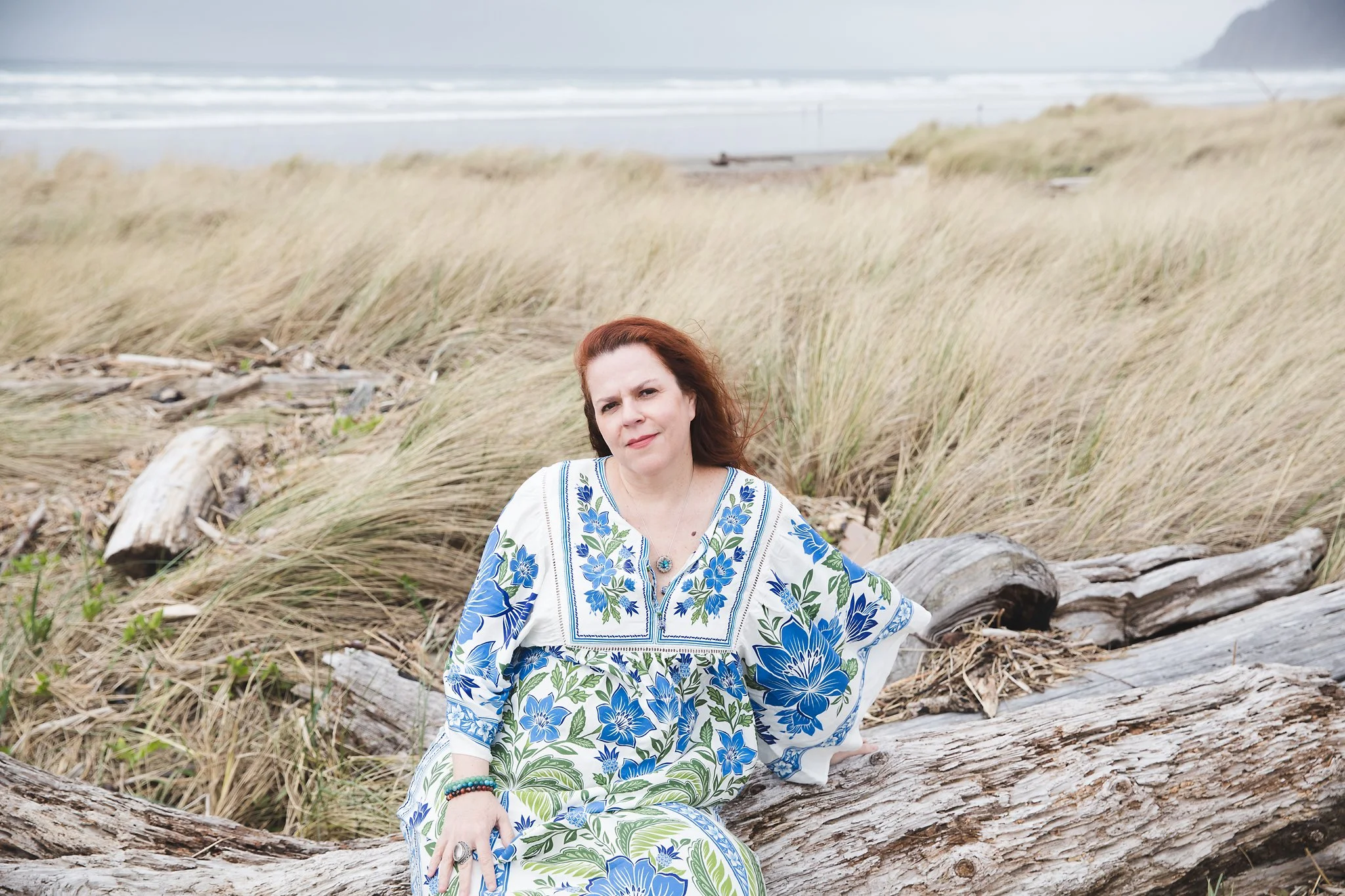
Somewhere in all that reading, the old thesis sat back up and looked at me. I recognized the work that was calling as a continuation of it, not a new project but the same quest in a new country.
The same instinct that once sent me back to fairy tales and birth charts and myth was sending me back again, the way a detective returns to a scene to notice what everyone else walked past: toward what the culture dismisses, and toward what we therefore learn to dismiss in ourselves, the parts of our own stories we've brushed aside as too small, too silly, too much.
So that is the work, in the forms it takes now.
I read the birth chart as the story of a life and the season it's in.
I sit with people in the middle of their own crossings, when one chapter is ending, and the next hasn't named itself yet, and I help them widen the lens until they can see themselves as the main character of their own great romance rather than a bystander to it.
And I read romance novels, the genre that arrived most recently to do this work out loud where almost no one is looking, and I write about them, and let them change how I approach everything else.
Romance has taught me to meet a threshold the way you'd meet a courtship, with curiosity, rather than bracing for the impact.
These days I live at the edge. The house where I am gives way to wetlands and farmlands, to a stand of old cedars in a quiet cemetery, the in-between kind of ground the wise women always seemed to choose. It suits me.
The edge is where one thing turns into another, which turns out to be the country I know best. I've been crossing thresholds my whole life. I simply do it now from deeper ground.
If you've always suspected the gold was hiding in the places you were told not to take seriously, you and I are going to get along. There are several ways into the work from here. Come in through whichever door is yours.
Short Bio
Vanessa Couto is a storyteller and teacher based in Portland, Oregon, who reads stories for the pattern underneath: in birth charts, in romance novels, and in the lives of people at a threshold.
She holds a master's in counseling psychology with an emphasis in depth psychology from Pacifica Graduate Institute and is an ICF Professional Certified Coach.
Her one-on-one work moves between archetypal astrology and threshold accompaniment, sitting with people while one chapter of a life ends and the next comes into focus.
She hosts the podcast Romancing the Threshold and writes on Substack about the medicine hidden in the stories our culture is quickest to dismiss.
She works with clients in English and Portuguese.